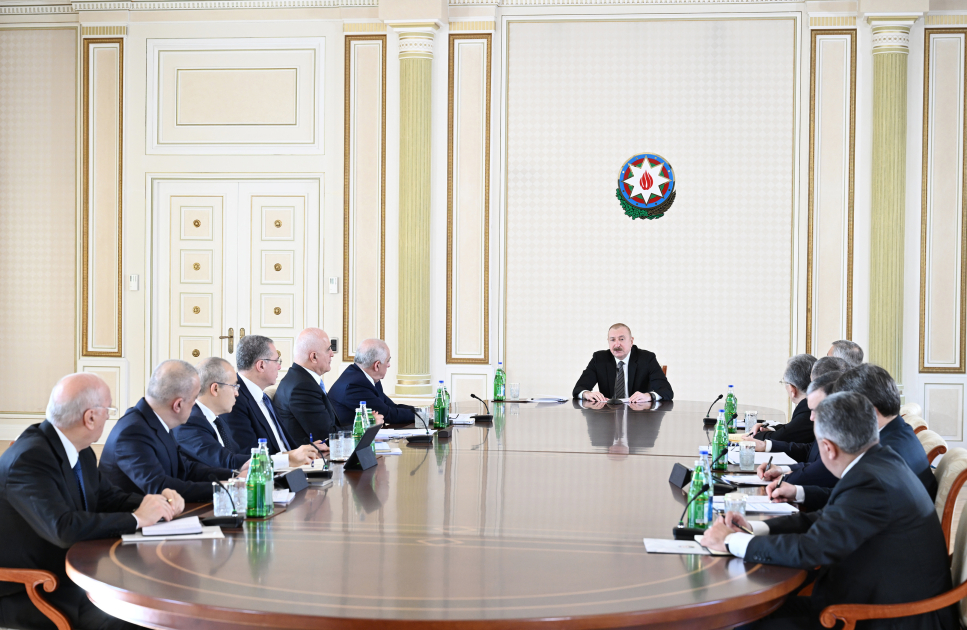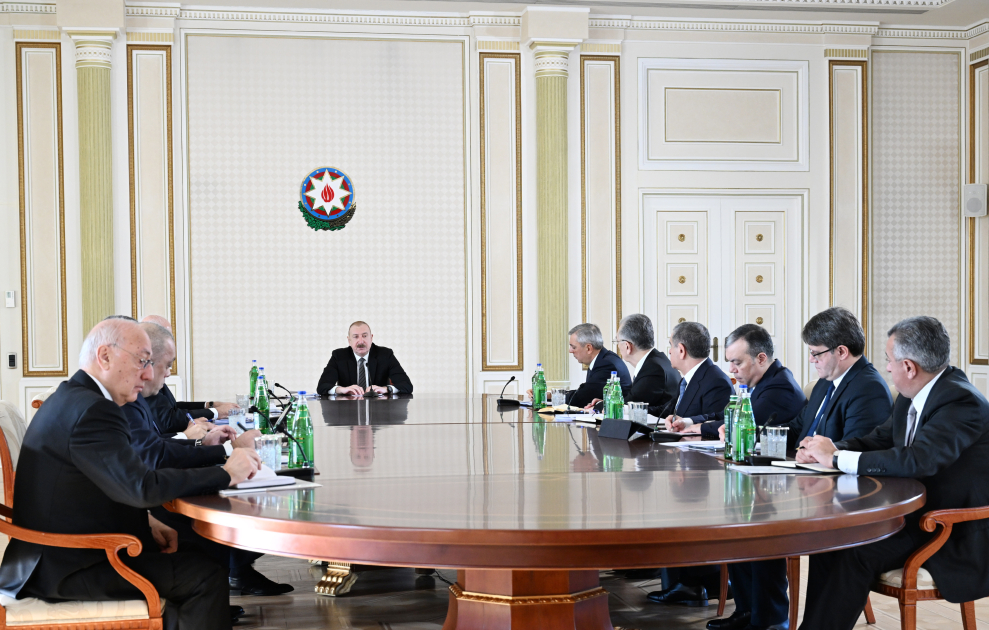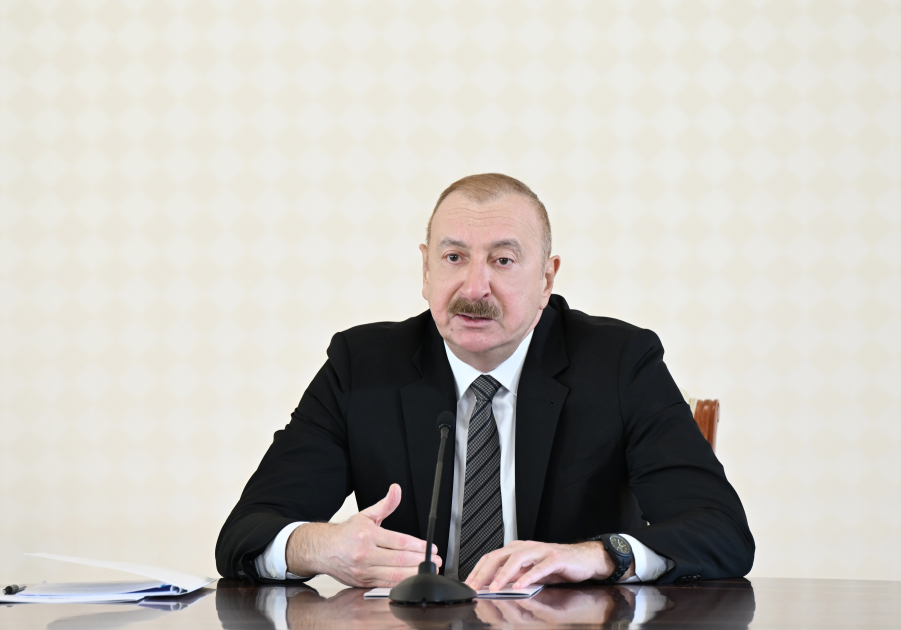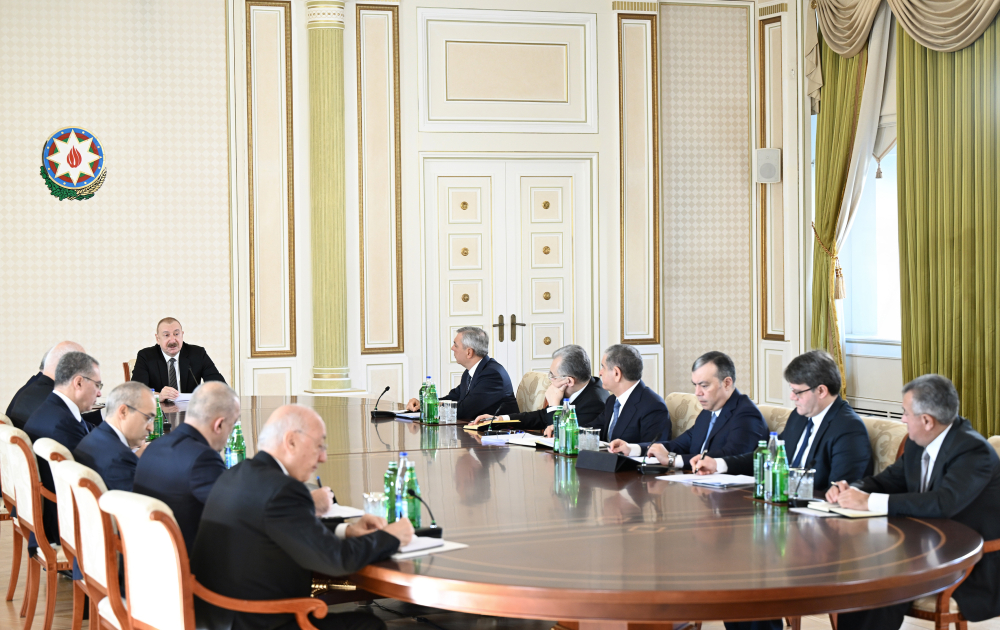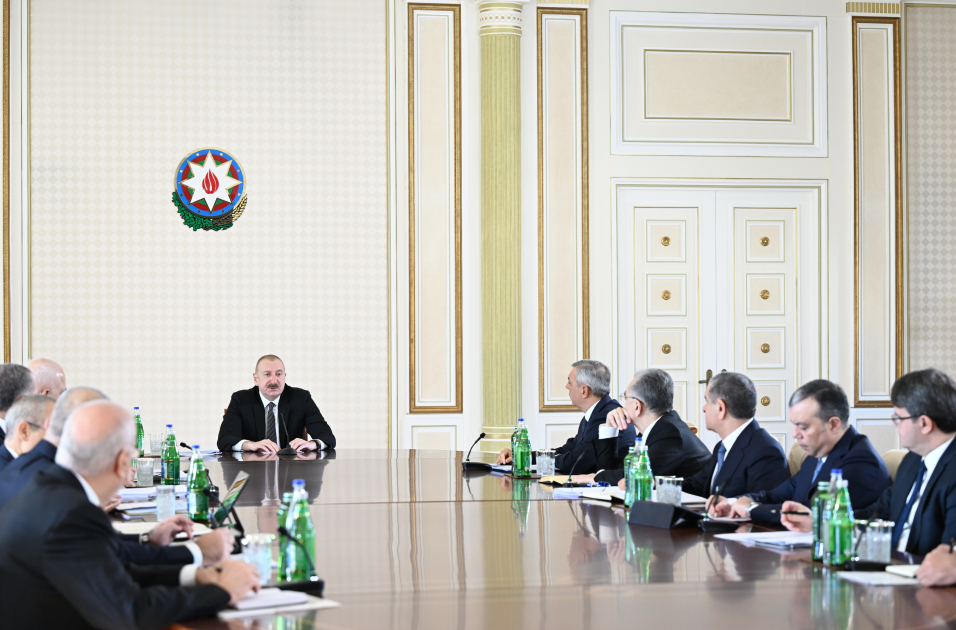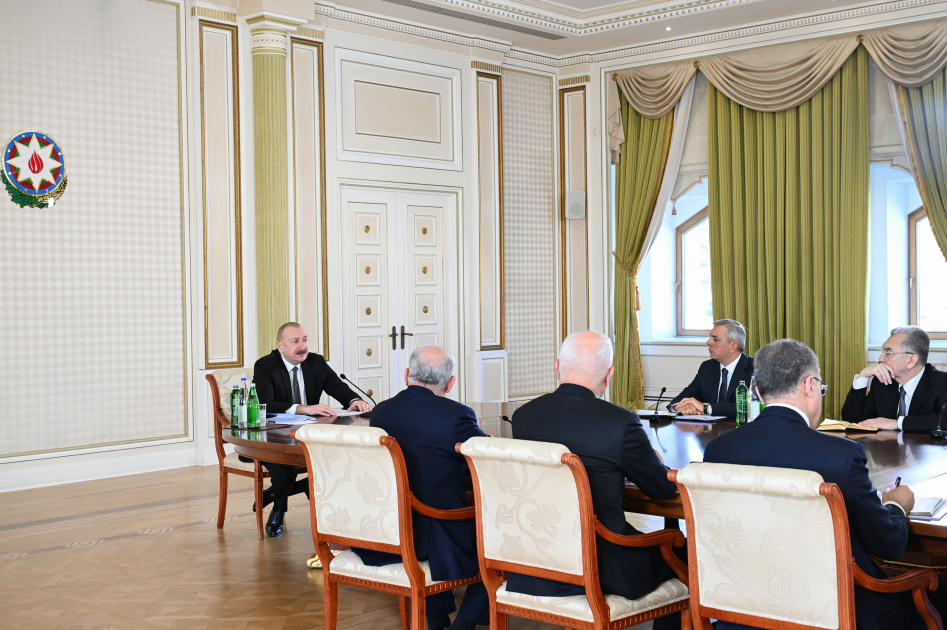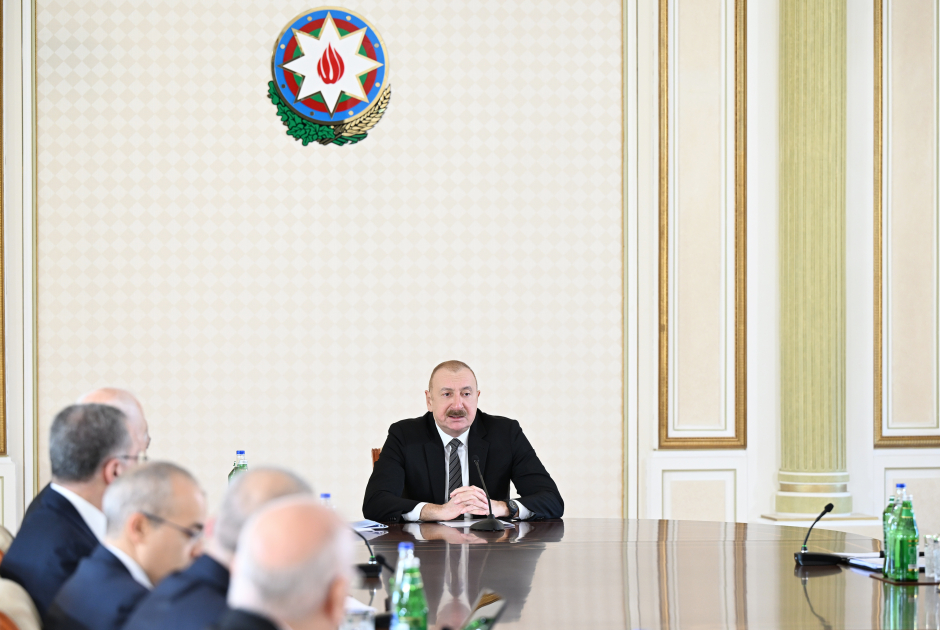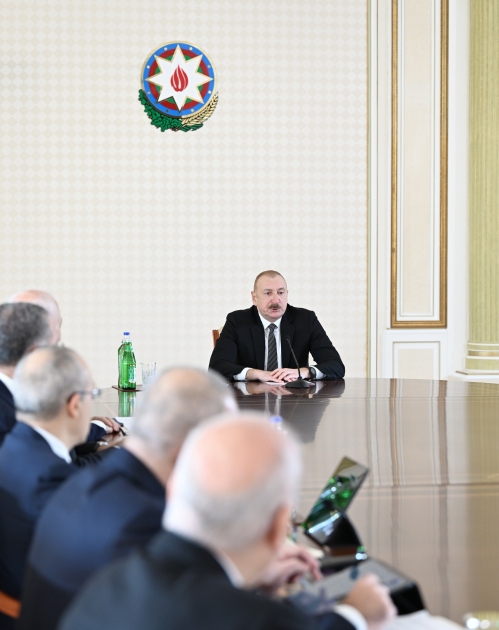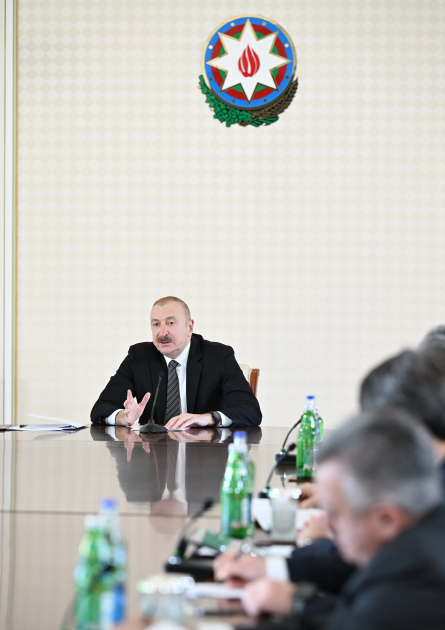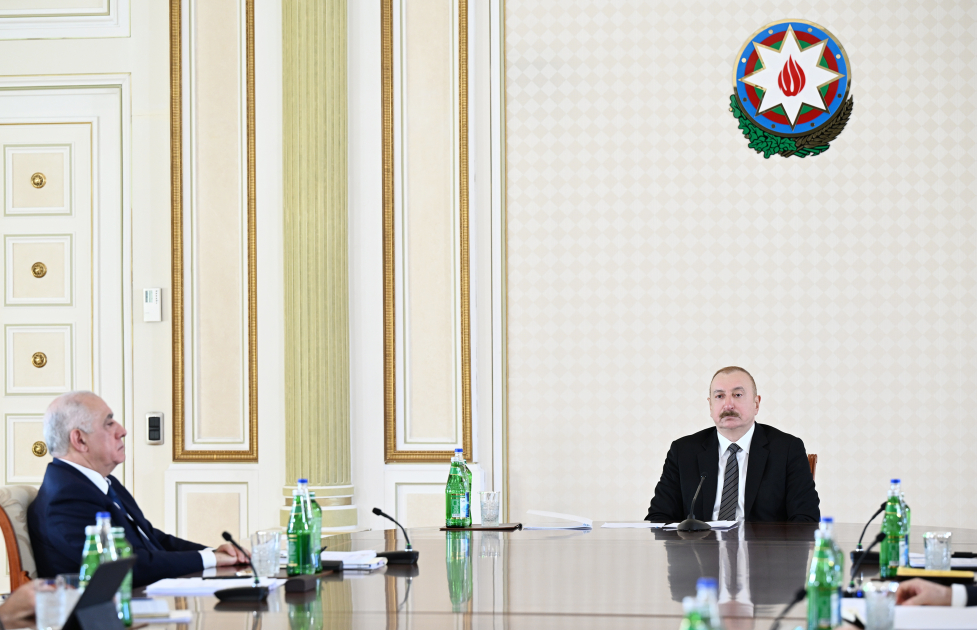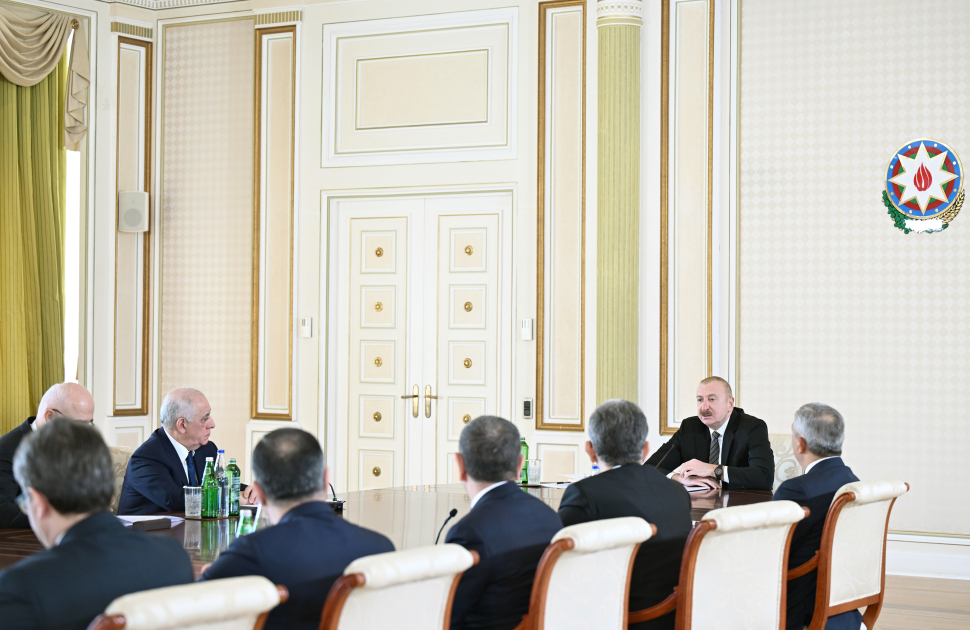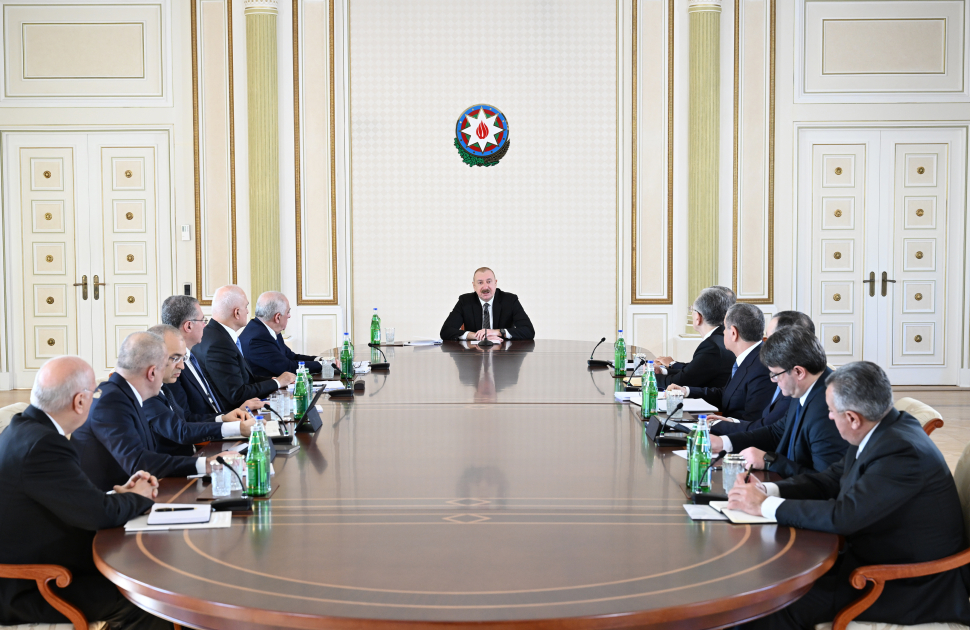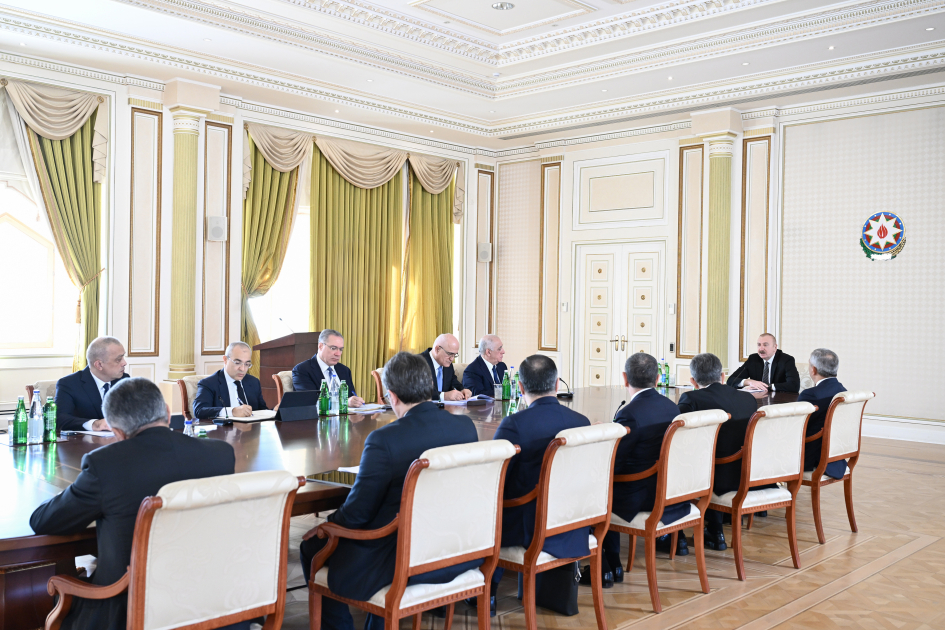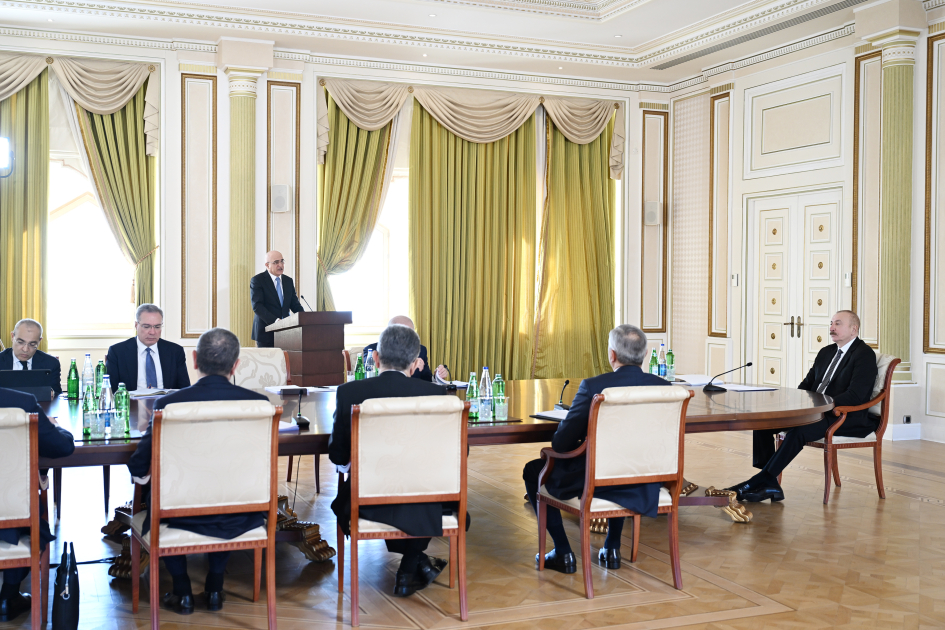
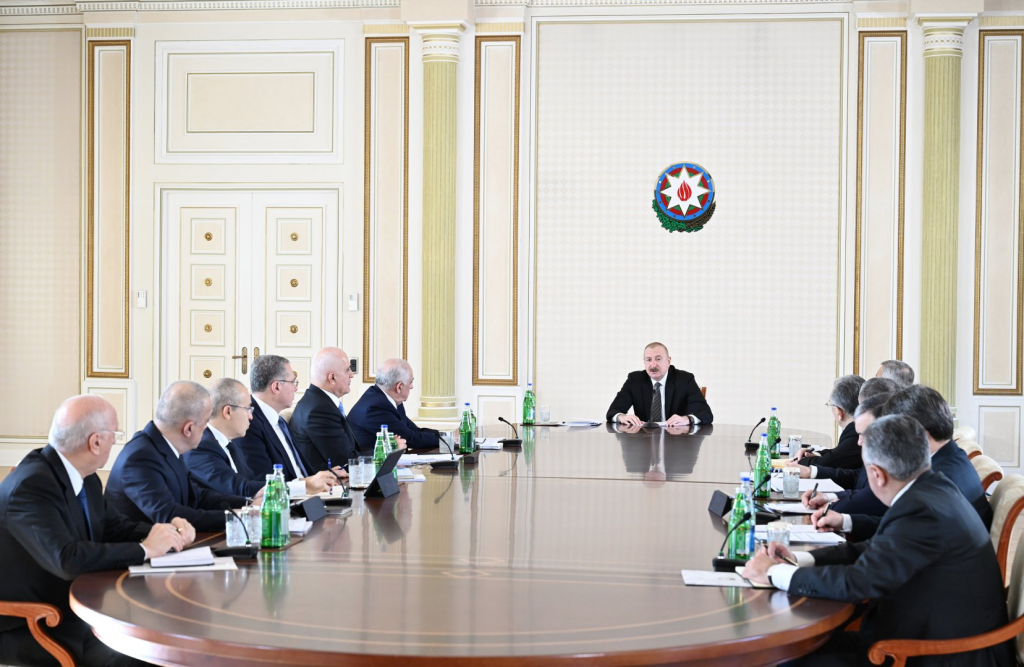
On January 12, President of the Republic of Azerbaijan Ilham Aliyev presided over a meeting dedicated to the State Program for the improvement of water supply, wastewater, and stormwater systems in Baku and the Absheron Peninsula for 2026–2035.
The head of state delivered a speech at the meeting.
Speech by President Ilham Aliyev
– Today, we will discuss the ongoing efforts to resolve the water supply challenges of Baku and the Absheron Peninsula. This issue occupies a particularly important place among the infrastructure projects we are implementing. As you know, in recent years, extensive infrastructure initiatives have been carried out nationwide, both in Baku and across all regions.
Almost all major infrastructure challenges have been resolved. Over the past twenty years, several regional development programs were adopted, each covering a five-year period, and all of them were successfully implemented. As a result, the country’s core infrastructure issues have been effectively addressed.
First and foremost, electricity supply now covers the entire country. We have entered a completely new stage of development. I recently touched upon this issue at the opening of a new wind power plant. Our energy generation capacity now exceeds our needs, and we are even exporting electricity. There was a time when we faced serious challenges in this area, including energy shortages, and had to import electricity from abroad.
Today, as a result of the measures we have taken, new generation capacity has been put in place — it currently stands at 10,000 megawatts. At the same time, substations, transmission lines, and the distribution network — all these elements — have been integrated into a single system. Most of the shortcomings in this area have been eliminated.
Today, we are thinking not only about our own energy needs — an issue that can now be considered resolved — but also about export routes. And we are not just thinking; we are actively creating them. In a few years, Azerbaijan will be exporting electricity to world markets at a level comparable to its current oil and gas exports, contributing to the energy security of multiple countries. I should also note that serious negotiations are currently underway with neighboring states, as well as with both our own companies and companies from those countries, to achieve this goal.
We have effectively resolved the issues of gas supply. Today, natural gas reaches 96 percent of the population. By this, I specifically mean the population, not just individual settlements. This achievement occupies a special place among the infrastructure projects we have carried out over the past 20 years. In the past, our gas supply was insufficient to meet domestic demand, and we also had to import gas from abroad, facing significant challenges. Today, more than ten countries — and this number continues to grow each year, with additional countries to be added to the list this year — are purchasing Azerbaijani natural gas and enhancing their energy security.
The construction of highways has gained significant momentum. Highways, rural roads, and intercity roads — all of these projects are ongoing today. Currently, all the infrastructure projects I have mentioned are being implemented in the liberated territories. Electricity generation capacities, transmission lines, roads, bridges, tunnels, water supply, and gas supply — in general, the territories that remained under occupation for many years are now being revitalized, coming back to life, and integrated into a single, unified infrastructure network.
Drinking water and irrigation projects have also always been a priority. The people of Azerbaijan remember well that this was one of the greatest challenges in the past. These issues have gradually been resolved. Today, drinking water and sewage projects have been implemented in most of our cities, and this process continues.
Over the past 20 years, we have built four large reservoirs with a total capacity of more than 500 million cubic meters. Among these, I should specifically mention the Takhtakorpu and Shamkirchay reservoirs. Had these reservoirs not been built, the water supply of Baku and the western regions could be facing serious problems today. The Takhtakorpu reservoir allowed us to channel the waters of the Samur River into the Jeyranbatan reservoir and maintain a strategic reserve there. This project also included a complete overhaul of the Jeyranbatan reservoir, along with the construction of a state-of-the-art water treatment complex.
Today, we are implementing drinking water and irrigation projects in the liberated territories. Several important projects have been completed over the past five years. Reservoirs that were once destroyed or rendered inoperative by Armenia have now been fully overhauled. Among them, I should first mention the Sarsang water reservoir, one of the largest not only in the liberated territories but also in our country as a whole. During the occupation of our lands, the Armenian state carried out water-related terror against us. The blocking of the waters of the Sarsang and Sugovushan reservoirs, as well as the use of water as a weapon, caused major problems. Water was cut off during critical months and then released unpredictably, resulting in severe floods.
Today, the Sugovushan and Sarsang reservoirs have been completely rebuilt. In other liberated areas, the Kondalanchay and three reservoirs in Fuzuli district, as well as the Khachinchay reservoir in Aghdam district, have also been reconstructed. The Zabukhchay reservoir, fully rebuilt in Lachin district, is already in operation. The construction of two additional large reservoirs in the liberated territories — the Hakarichay and Bargushadchay reservoirs — is also on the agenda, and preparatory work is already underway. Tangible construction is expected to begin this year.
Water resources are vital for every country. Approximately a quarter of our internal water sources come from territories that were once under occupation. The advantage of these sources is that most of them are located within Azerbaijan’s territory. In other words, our dependence on other countries has been significantly reduced as a result of the return of these lands. Other important water sources for Azerbaijan are formed abroad — including the Kura River, the Araz River, and the Samur River. While focusing on domestic water management, we must also take this sensitive issue into account.
Today, serious concerns about climate change affect countries worldwide, many of which are already experiencing significant damage. All issues related to our water security are being addressed in a systematic and comprehensive manner. As I noted, over the past 20 years, the projects I have listed — and many more that are currently underway — demonstrate that, had these steps not been taken in a timely manner, water security challenges could have created very serious problems for us today. Our goal is to provide sustainable water for the population, industry, and agriculture, protect water sources, increase reservoir capacity, ensure full accounting, and store water during the season so that it can be used throughout the year.
Unfortunately, the drinking water problems in Baku and the Absheron Peninsula have persisted for many years. Some work has been done in this area; however, I believe the time has come to adopt a large-scale, comprehensive state program. This program will cover the city of Baku and its settlements, the city of Sumgayit, and the Absheron district. The preparation process began some time ago on my instructions, and the program is now nearly complete. Today, we will discuss it, review the work that has already been done, and determine what more needs to be accomplished.
As mentioned, the primary goal of this program is to provide Baku and the Absheron Peninsula with sustainable drinking water. The program must be fully implemented by 2035, which in itself illustrates its large scale, as considerable time is required for complete execution. The financial resources for its implementation have already been identified. Funding will come from two sources: the state budget and foreign loans. The reforms carried out in this sector in recent years have significantly reduced our foreign debt. Today, Azerbaijan is one of the world’s leading countries in terms of the ratio of foreign debt to GDP, which stands at just over 6 percent. This strong financial position allows us to secure additional foreign loans, particularly as leading international financial institutions are approaching us proactively.
We could also implement this program using domestic funds. However, the country faces many challenges, including the restoration of Garabagh and East Zangezur, strengthening our military capacity, and carrying out other projects and social initiatives. Therefore, we will use two sources of financing. As a result of this program, around 30 new reservoirs will be constructed — major, large-scale infrastructure projects. Meter installation should reach 100 percent. Currently, 70 percent of the population receives uninterrupted drinking water; this figure is expected to rise to 95 percent. The water supply of Baku, Sumgayit, Absheron district, and 64 settlements will be significantly improved. More than 200 kilometers of main canals, along with an equal length of distribution networks, will be built or reconstructed.
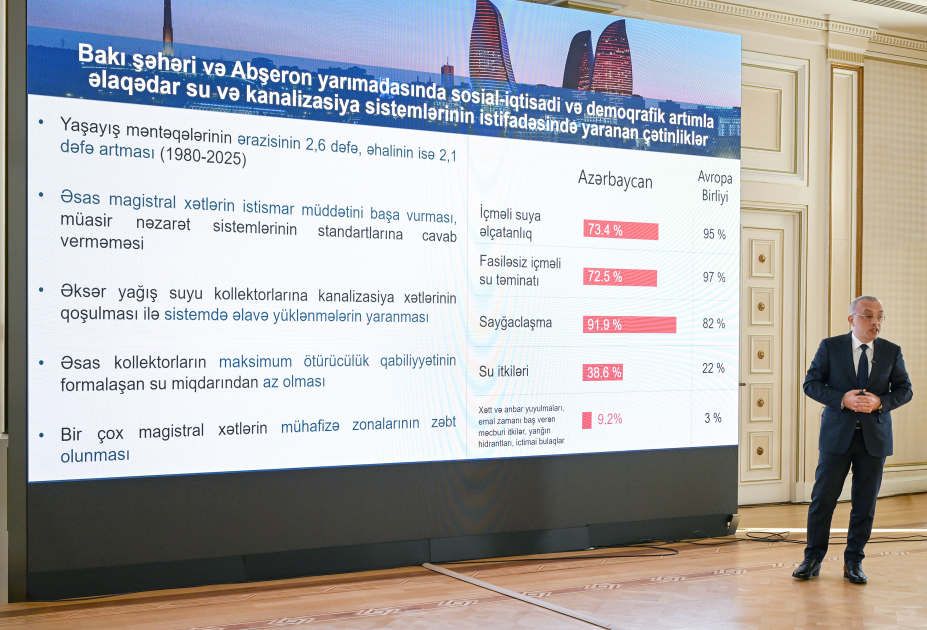
One of the main problems we face today is water loss. If losses were low, even the water reserves currently available to us could be sufficient. However, we must plan and calculate for the future. After all, the population is growing, our industry is expanding, and, naturally, so is demand. Therefore, sharply reducing water losses is one of our top priorities. Today, losses in this area account for approximately 40–45 percent. As mentioned, the implementation of this program is expected to significantly lower this figure.
Currently, only 50 percent of the population has access to sewage services. As a result of this program, that figure is expected to increase to 95 percent. When heavy rains occur, urban transport can be paralyzed, causing very serious problems. This is not unique to Baku or Azerbaijan — we see it on television everywhere in the world. Floods have become commonplace even in the cities of the most developed countries. No urban infrastructure can fully withstand several days of heavy, continuous rain. Nevertheless, we still have notable weaknesses in this area. Therefore, a new collector network will be built on 30 streets of Baku to manage rainwater, which will bring significant benefits.
Water discharged into the sea must be fully purified. This is one of the key factors affecting the pollution of the Caspian Sea. Accordingly, additional measures will be taken. The modernization and expansion of the Hovsan water treatment plant are also planned.
A digital management system should be applied across the water sector. I have already shared information on this, but I would like to reiterate that, for the first time, a desalination plant will be built in Azerbaijan to improve the water supply of the Absheron Peninsula. This process has already begun, and the project will be implemented entirely through foreign investment. It will increase the volume of water supplied to Baku and Absheron. Technological advances make this feasible, as the Caspian Sea is not highly saline. There is full confidence that desalination will provide clean, high-quality drinking water, while simultaneously creating a large resource base for irrigation.
The Samur-Absheron water canal has been completely rebuilt. It is now fully lined with concrete, and water losses are minimal. However, additional measures are planned to further enhance the infrastructure of this canal and ensure a sustainable water supply to the Jeyranbatan reservoir. Currently, water enters Baku from five sources. The sixth source will be the desalination plant, and, of course, this flow must be fully secured.
I should also note that one of the major projects we have implemented over the past 20 years is the fully reconstructed Oghuz-Gabala-Baku water line. Had this water line not been built, Baku would be facing very serious water shortages today.
As I mentioned, the program is both broad and highly specific. All tasks have been clearly defined, and oversight will be exercised by both the Government and the Presidential Administration. Public oversight must also be ensured. The implementation of this program should be extensively covered in the media so that the people of Azerbaijan, especially those living in Baku and Absheron, can see and know when each issue is being addressed. There must be no delays, because, let me reiterate, the program is designed to cover the period until 2035. While we initially considered implementing it even faster, in order to avoid rushing and to ensure all work is carried out with quality, we decided on a program spanning approximately 10 years. There is sufficient time, but not a single day should be wasted.
X X X
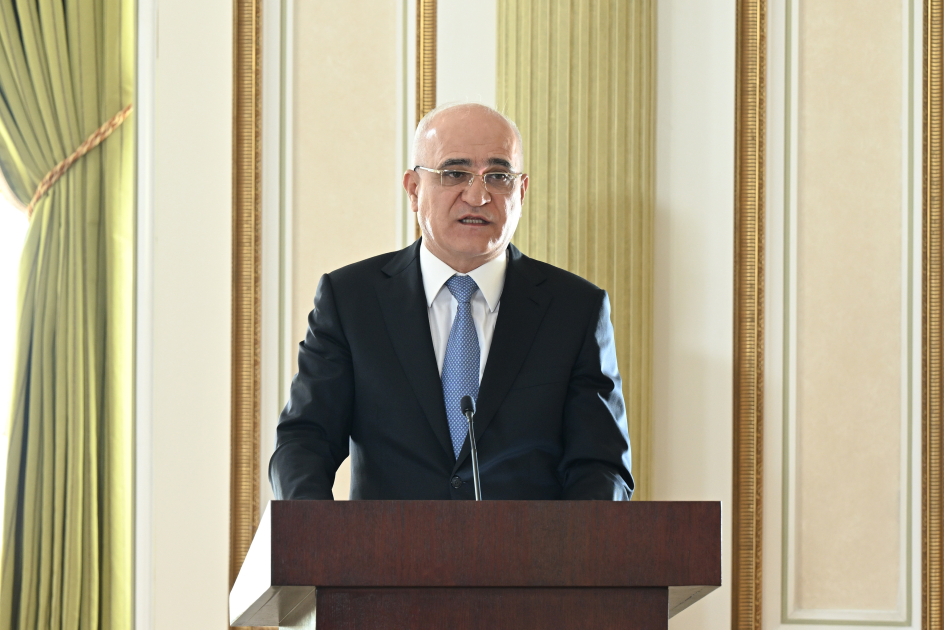
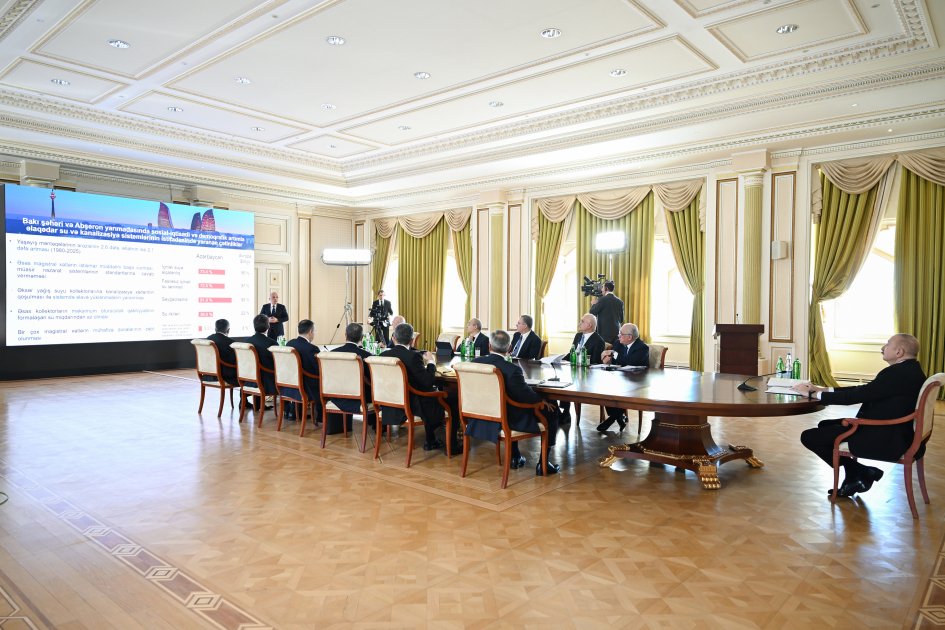
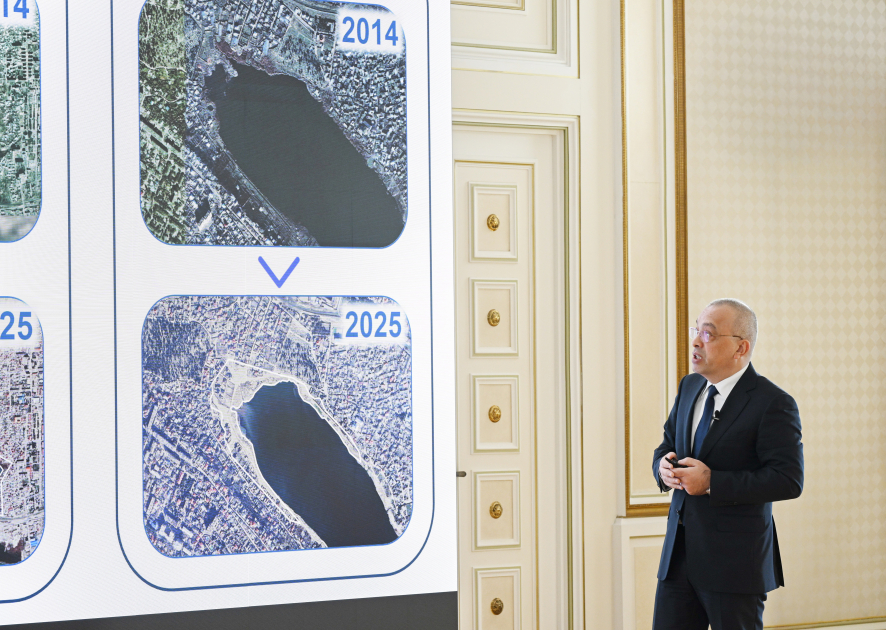
Subsequently, Deputy Prime Minister Shahin Mustafayev and Chairman of the Azerbaijan State Water Resources Agency Zaur Mikayilov informed President Ilham Aliyev about the progress achieved so far and the upcoming measures planned under the program.
X X X
The discussions then continued.